




What is a Liquid Ink Pen? Decoding the Core Technology and Value of Writing Tools
 Jun 25, 2025|
 View:1444
In the digital age, the liquid ink pen has become the preferred tool for students, artists, and business professionals, thanks to its smooth writing experience and professional performance. Different from traditional gel pens or oil-based ballpoint pens, it achieves a near-frictionless writing feel through the synergistic effect of liquid ink and a precision nib. This article comprehensively analyzes its working principle, technical advantages, and application scenarios to help you deeply understand this innovator in the writing field.

Definition and Core Working Principle
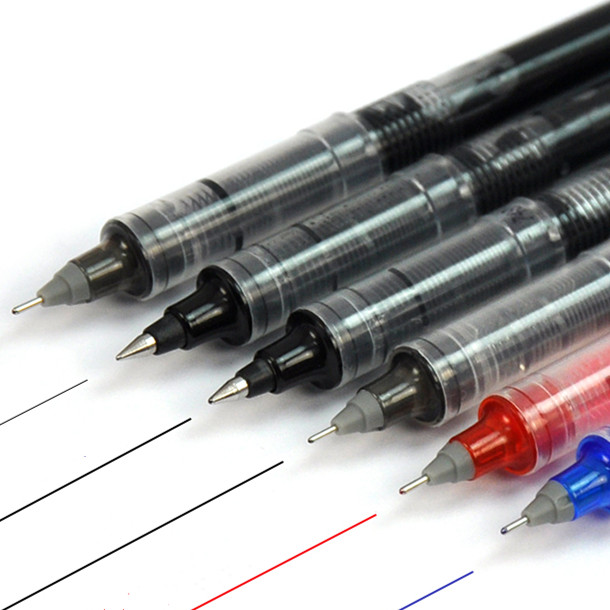
A liquid ink pen is a writing tool that uses liquid ink as the writing medium. Through a precision roller ball or fibre tip structure, it utilises capillary action to evenly deliver ink to the paper surface, achieving a smooth and low-resistance writing experience. Its core lies in:
Ink Characteristics
· Adopts water-based or solvent-based formulas, with stronger fluidity than gel or oil-based inks, enabling continuous supply through capillary action. Its low-viscosity property allows ink to quickly penetrate paper fibers, reducing bleeding (e.g., on thin workbook paper or sketch paper).
Nib Technology
· Liquid roller ball: Contains a micro metal ball (commonly 0.5mm~1.0mm), which evenly releases ink when rolling, reducing writing resistance.
· Fibre Tip: Uses high-density synthetic fiber bundles to control ink volume through adsorption, suitable for precise drawing and fine-line writing.
Technical Advantages: Why is the Writing Experience More Excellent?
1. Smoothness and Quick-Drying Property
· Zero-resistance writing: The physical rolling structure of the roller nib (e.g., metal tip) almost eliminates paper friction, achieving a "floating" writing feel, especially suitable for long-term note-taking or signing.
· Quick-drying technology: Ink formulas contain volatile solvents, drying within 3 seconds after contacting paper (e.g., Uni-Ball Signo series), preventing smudging by hands.
2. Color Rendering and Durability
· High-saturation color rendering: Liquid ink molecules are evenly distributed, resulting in more vibrant colors (especially for colored inks), without the "oily film" feeling of oil-based inks.
· Waterproof and fade-resistant: Some formulas add pigment particles (non-dyes), with basic waterproof properties, making important documents more reliable for long-term storage.
3. Precision Ink Control System
· Constant ink flow technology: The capillary grooves inside the feed cooperate with the ink reservoir to ensure consistent ink flow from full to empty, eliminating ink skipping or accumulation.
· Visible ink window design: Transparent barrels or windows display remaining ink in real time (e.g., Pilot V Sign), avoiding writing interruptions.
Types and Designs: Meeting Diverse Scenario Needs
1. Classification by Nib Structure
· Needle Tip: 0.28~0.5mm ultra-fine needle tube, suitable for precise writing in engineering drawing, account forms, etc.
· Bullet Tip: 0.7~1.0mm general specification, balancing smoothness and durability for daily documents.
· Fibre Tip pen: 2.0mm elastic fiber tip, supporting pressure-sensitive changes, often used for artistic graffiti or title design.
2. Ergonomic Design
· Triangular barrel: Fits the curve of finger pads, relieving fatigue from long-time writing, suitable for student homework or exam scenarios.
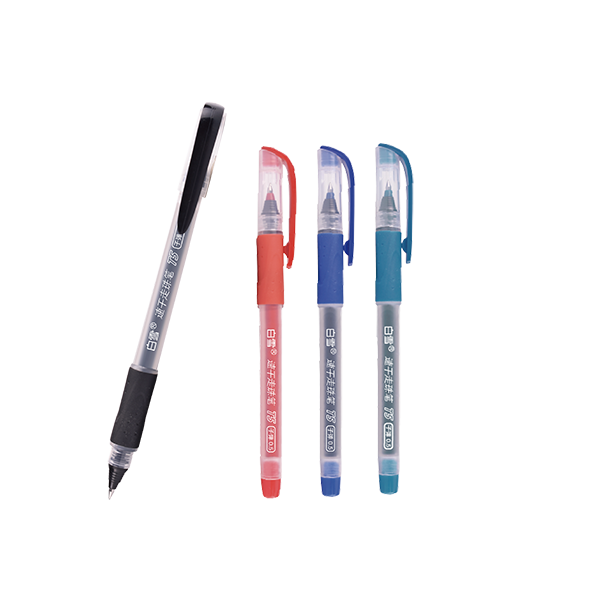
· Non-slip grip: Soft gel material increases friction, preventing slipping due to sweaty hands.
Application Scenarios: From Daily to Professional
· Learning and note-taking: Quick-drying property suits left-handed users; fine nibs (0.5mm) ensure clear typesetting in small spaces.
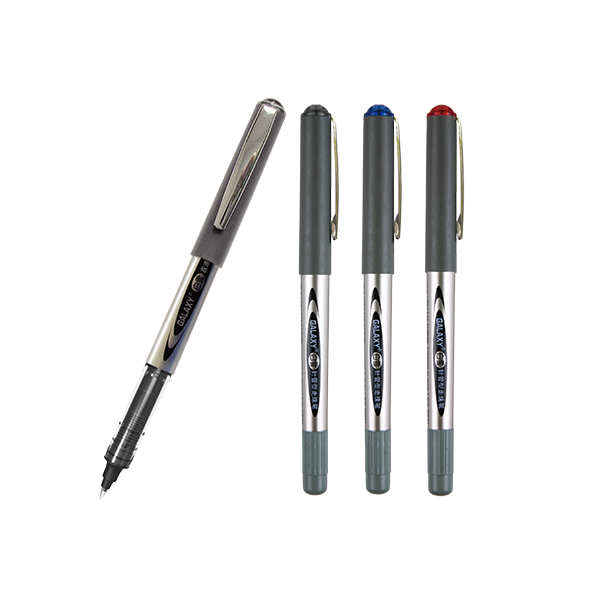
· Business signing: Metal barrels (e.g., high-end roller pens) enhance ritual atmosphere; black ink complies with document standards.
· Creative drawing: Pressure-sensitive changes of fibre tips support shading transitions in sketches; multi-color inks expand visual expression.
· Industrial scenarios: Drop-resistant design + large ink cartridges (e.g., 120μL) meet high-frequency needs such as workshop records and inspection form filling.
Purchase Guide: Key Parameter Analysis
Parameter | Recommended Value | Scenario Significance |
Nib size | 0.5mm (fine) | No bleeding in notes/forms |
Ink capacity | ≥100μL | Reduce replacement frequency, improve efficiency |
Waterproofness | ISO 12757-2 certification | Long-term preservation of important documents |
Grip design | Triangular barrel/soft gel grip | Anti-fatigue for student homework |
Conclusion: Liquid Ink Pen—A Writing Innovation Merging Science and Aesthetics
The liquid ink pen redefines the value of writing tools with its liquid ink fluidity, ball bearing structure, and ergonomic design. It not only solves problems like ink skipping and stuttering in traditional pens but also becomes an efficiency engine for learning, office work, and artistic creation through professional-grade color rendering and durability.
Choosing a liquid ink pen supplier with a complete quality inspection system and R&D capability is key to ensuring writing quality. As a brand with 37 years of deep cultivation in stationery manufacturing, Snowhite's liquid ink pen series has passed ASTM D-4236 safety certification, offering full-specification nibs from 0.28mm to 1.0mm and 6-color ink solutions, adapting to diverse scenarios from student homework to industrial records. Contact our technical team to obtain customized writing solutions!



View More(Total0)Comment lists