



The Complete Guide: Pros and Cons of Using Liquid Ink Roller Pens for Students
 Nov 13, 2025|
 View:1519
Students face a critical decision when selecting writing instruments for their academic journey. The liquid ink roller pen has emerged as a popular alternative to traditional ballpoint pens, offering distinct advantages and some notable drawbacks. Understanding these characteristics helps students, parents, and educators make informed purchasing decisions that enhance the learning experience.
Key Takeaways
- Liquid roller ball pens provide smooth writing with minimal pressure, reducing hand fatigue during extended study sessions
- These writing instruments deliver consistent ink flow and vibrant colors, making notes more readable and organized
- Students benefit from quick-drying properties that minimize smudging, though left-handed writers may experience occasional issues
- While liquid ink roller pens require proper storage to prevent drying, their performance justifies careful maintenance
- Budget-conscious students should weigh initial costs against long-term writing quality and comfort benefits

Understanding Liquid Ink Roller Pen Technology
Construction and Design
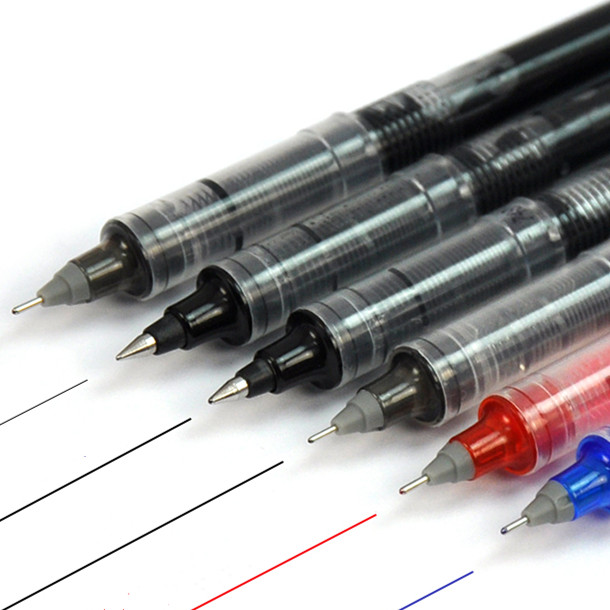
Liquid roller ball pens feature a unique ball-and-socket mechanism that sets them apart from standard ballpoint pens. The pen tip contains a small ball, typically measuring 0.5mm to 0.7mm in diameter, which rolls within a precisely engineered socket. This ball rotates smoothly as it contacts paper, drawing liquid ink from the reservoir and transferring it to the writing surface.
The ink formulation distinguishes liquid ink roller pens from oil-based alternatives. Manufacturers create water-based or gel-based ink that flows more freely than traditional ballpoint ink. This liquid consistency allows for effortless writing without requiring significant pressure. The ink reservoir connects directly to the ball mechanism through a feed system that regulates flow, preventing leaks while ensuring consistent delivery.
Quality liquid roller ball pens incorporate air-tight caps or retractable mechanisms to prevent premature drying. The cap creates a seal around the tip, maintaining ink moisture between uses. Some advanced models feature spring-loaded retraction systems that protect the writing point when not in use.
| Component | Function |
Ball Tip | Transfers ink smoothly to paper surface |
Liquid Ink Reservoir | Stores water-based or gel-based ink formulation |
Feed System | Regulates consistent ink flow to prevent flooding |
Air-Tight Cap | Prevents ink from drying when pen is not in use |
Barrel Design | Houses components and provides comfortable grip |
Key Features for Students
Students benefit from several distinctive features that liquid ink roller pens offer for academic work. The smooth writing experience reduces hand strain during lengthy note-taking sessions, allowing students to focus on content rather than physical discomfort. Modern liquid roller ball designs incorporate ergonomic grips that distribute pressure evenly across the hand.
The liquid ink formulation produces vibrant, consistent lines that enhance readability. Students can easily distinguish between different colors when organizing notes or highlighting key concepts. Many models offer a range of colors beyond standard blue and black, supporting creative learning methods and visual organization strategies.
Quick-drying ink technology addresses concerns about smudging, particularly important when students need to review notes immediately after writing. The capillary action of liquid ink allows it to penetrate paper fibers rapidly, setting within seconds of application. This property proves especially valuable during timed examinations or fast-paced lectures.
Liquid ink roller pens typically provide substantial writing distances before requiring replacement. A quality pen can produce continuous lines spanning 700 to 800 meters, equivalent to approximately 50 to 60 pages of standard notebook paper with typical note density. This durability makes them economical choices for students with heavy writing demands throughout academic terms.
Advantages of Liquid Ink Roller Pens for Academic Use
Smooth Writing Experience
The primary advantage students notice when using liquid roller ball pens is the exceptionally smooth writing sensation. Unlike ballpoint pens that require downward pressure to activate oil-based ink, liquid ink roller pens glide across paper with minimal effort. This reduced pressure requirement directly translates to less muscle fatigue during extended writing periods.
Research indicates that students who write for multiple hours daily experience fewer hand cramps and tension when using liquid ink roller pens. The effortless motion allows writers to maintain consistent speed without sacrificing legibility. Students can focus mental energy on processing lecture content rather than managing physical discomfort.
The ball mechanism in liquid roller ball pens rotates more smoothly than ballpoint alternatives, creating fluid lines without skipping or dragging. This consistent contact between pen tip and paper eliminates the frustration of interrupted strokes or uneven ink distribution. Students produce cleaner, more professional-looking notes that enhance study effectiveness.
Superior Ink Flow and Vibrancy
Liquid ink roller pens deliver exceptional ink saturation that makes written content stand out on the page. The water-based or gel formulation flows readily through the ball mechanism, depositing rich color with every stroke. This vibrancy improves readability, particularly when students review notes under various lighting conditions or photograph pages for digital storage.
The consistent ink flow ensures uniform line width throughout writing sessions. Students do not experience the fading or lightening common with ballpoint pens as ink supplies diminish. Each word maintains the same intensity from the first line to the last, creating visually balanced pages that are easier to scan during study sessions.
Color variety in liquid roller ball lines supports effective note organization. Students can implement color-coding systems to differentiate between concepts, highlight important information, or create visual hierarchies within their notes. The distinct colors remain true to their appearance even after extended storage periods.
| Writing Characteristic | Benefit for Students |
Minimal Pressure Required | Reduces hand fatigue during long lectures |
Consistent Line Width | Creates uniform, professional-looking notes |
Vibrant Color Output | Enhances readability and visual organization |
No Skipping or Dragging | Maintains writing flow and speed |
Quick-Drying Properties
Modern liquid ink roller pens incorporate fast-drying formulations that minimize smudging concerns. The water-based ink absorbs into paper fibers within seconds, allowing students to handle pages immediately after writing. This rapid drying time proves particularly valuable during examinations when students must move quickly between questions without waiting for ink to set.
Left-handed students benefit significantly from quick-drying technology. Traditional writing instruments often smudge as the writer's hand passes over fresh ink, creating messy pages and stained hands. Quality liquid roller ball pens reduce this issue substantially, though users should still allow a brief moment for complete drying on certain paper types.
The quick-drying characteristic supports efficient note-taking methods. Students can write rapidly without concern about smearing previous lines, maintaining neat pages even during fast-paced lectures. This feature also protects notes from accidental water exposure or humidity that might affect slower-drying alternatives.
Comfortable Extended Use
Ergonomic design considerations make liquid ink roller pens ideal for students with heavy academic workloads. The reduced pressure requirement allows writers to maintain a lighter grip, preventing the finger indentations and joint pain associated with prolonged ballpoint use. Students can write comfortably for multiple hours without developing painful calluses or stiffness.
Many liquid roller ball models feature cushioned grip sections made from rubber or silicone materials. These grips distribute pressure across a wider surface area, reducing stress concentration on specific finger points. The soft texture also prevents slipping, allowing students to maintain control without tightening their grip excessively.
The balanced weight distribution in well-designed liquid ink roller pens contributes to writing comfort. Manufacturers position the ink reservoir and components to create a center of gravity near the grip point, reducing the effort required to control pen movement. This balance becomes increasingly important during extended writing sessions when even minor design flaws can accumulate into significant discomfort.
Versatility Across Paper Types
Liquid roller ball pens perform consistently across various paper qualities commonly encountered in academic settings. The free-flowing ink adapts well to both smooth and textured surfaces, maintaining even distribution regardless of paper composition. Students can use the same pen for notebook paper, examination booklets, and specialty materials without adjusting their writing technique.
The liquid ink formulation works effectively on thin papers without excessive bleeding through to the reverse side. While some show-through may occur with very lightweight materials, quality liquid ink roller pens minimize this effect compared to fountain pens or markers. Students can write on both sides of standard notebook pages without significant interference.
This versatility extends to different writing angles and speeds. Whether students write at steep or shallow angles, the ball mechanism continues delivering consistent ink flow. The pen responds equally well to slow, deliberate writing during complex problem-solving and rapid note-taking during lectures.
Disadvantages Students Should Consider
Cost Considerations
Liquid ink roller pens typically command higher prices than standard ballpoint alternatives. The advanced manufacturing processes required for precision ball mechanisms and specialized ink formulations increase production costs. Students operating on tight budgets may find the initial investment challenging, particularly when purchasing multiple pens for different colors or backup supplies.
The per-unit cost varies significantly based on brand reputation and feature sophistication. Basic liquid roller ball models may cost two to three times more than economy ballpoint pens, while premium versions can reach even higher price points. Students must evaluate whether the writing quality improvements justify the additional expense within their personal budgets.
| Cost Factor | Impact on Student Budget |
Higher Initial Purchase Price | Requires larger upfront investment compared to ballpoint options |
Replacement Frequency | May need periodic replacement if ink dries or runs out |
Multi-Color Sets | Increases total cost when building comprehensive color collection |
Premium vs. Economy Models | Wide price range requires careful selection based on needs |
Budget-conscious students can mitigate costs by purchasing liquid ink roller pens selectively for specific purposes. Using these pens for important note-taking while reserving ballpoint pens for casual writing or scratch work extends the lifespan of premium writing instruments. Students should calculate their typical ink consumption to determine whether the investment provides adequate value.
Ink Drying and Storage Requirements
Liquid roller ball pens require more careful storage than traditional ballpoint alternatives. The water-based ink formulation remains susceptible to evaporation when exposed to air for extended periods. Students who forget to replace caps or leave pens uncapped for several hours may find the tips dried and unusable, resulting in frustration and waste.
Proper storage becomes essential for maintaining liquid ink roller pen performance. Students must develop the habit of immediately capping pens after use, which requires conscious attention during busy study sessions or lectures. This additional step may seem minor but becomes increasingly important when managing multiple pens simultaneously.
Temperature and humidity conditions affect liquid roller ball ink stability. Extreme conditions can cause ink performance variations. Students should store pens in moderate environments, avoiding direct sunlight, heating vents, or freezing conditions.
The following practices help students maintain liquid ink roller pen functionality:
- Replace caps immediately after each use to prevent tip drying
- Store pens horizontally to maintain even ink distribution
- Keep pens away from extreme temperature locations
- Check cap seals periodically to ensure air-tight closure
- Test pens before important examinations to verify functionality
- Consider using pen cases that provide additional protection
Potential Smudging Issues
Despite quick-drying formulations, liquid roller ball pens can still produce smudging under certain conditions. Left-handed writers face particular challenges as their hands naturally drag across freshly written text. The direction of writing causes the hand to pass over recent ink deposits before complete drying occurs, potentially creating smears that reduce legibility.
Paper quality significantly influences smudging tendencies. Liquid ink roller pens perform best on paper with moderate absorbency that allows ink to penetrate fibers quickly. Highly glossy or coated papers may resist ink absorption, extending drying times and increasing smudging risk. Students should test their preferred liquid roller ball pens on actual course materials before relying on them for critical assignments.
High-speed writing during examinations or rapid note-taking can overwhelm even fast-drying formulations. When students write multiple lines in quick succession, the cumulative moisture from fresh ink can create conditions favorable to smudging. Writers must occasionally pause to allow complete drying, particularly when working on important documents.
Humid environments extend ink drying times significantly. Students in tropical climates or during humid seasons may experience increased smudging compared to those in dry conditions. The moisture in the air slows evaporation of water-based ink components, requiring additional drying time before paper handling.
Refill Availability and Compatibility
Finding compatible refills for liquid ink roller pens presents challenges in some regions. Unlike standardized ballpoint refills that fit numerous pen bodies, liquid roller ball refills often feature proprietary designs specific to manufacturers or product lines. Students may struggle to locate appropriate replacements, particularly for less common brands or discontinued models.
The refill selection process requires attention to specific parameters including tip size, ink color, and connector configuration. Students must identify exact model numbers or specifications to ensure compatibility. This complexity increases the likelihood of purchasing incorrect refills, resulting in wasted money and continued pen unavailability.
Some liquid roller ball pens feature sealed construction that prevents refilling entirely. These disposable models require complete replacement when ink supplies deplete, generating additional waste and recurring costs. Students concerned about environmental impact or long-term economics may prefer refillable alternatives, though these typically command higher initial prices.
Limited Pressure-Sensitive Applications
Certain academic tasks require writing on multiple-layer forms or carbon-copy documents. Liquid ink roller pens perform poorly in these applications compared to ballpoint alternatives. The minimal pressure required for normal writing proves insufficient to create clear impressions on underlying layers, rendering liquid roller ball pens unsuitable for administrative forms, receipts, or multi-part assignments.
The ink formulation also limits performance on non-traditional surfaces. While standard ballpoint pens can write on glossy materials, plastic covers, or sealed envelopes, liquid roller ball pens may skip or produce inconsistent results on these surfaces. Students occasionally need to sign or annotate materials where liquid ink roller pens prove impractical.
Medical or science students who complete laboratory notebooks with carbon copies face particular limitations. Many institutional protocols require ballpoint pens specifically to ensure proper impression transfer. Students in these programs must maintain separate writing instruments for different purposes, reducing the universal utility of liquid ink roller pens.
Comparison with Alternative Writing Instruments
Selecting appropriate writing instruments requires understanding how liquid roller ball pens compare to common alternatives. The following table provides a comprehensive overview of key characteristics across popular student pen types:
| Feature | Liquid Ink Roller Pen | Ballpoint Pen | Gel Pen | Fountain Pen |
Writing Smoothness | Excellent, minimal pressure | Good, requires moderate pressure | Excellent, very smooth | Superior, most smooth |
Hand Fatigue Reduction | High benefit for long sessions | Moderate benefit | High benefit | Highest benefit |
Ink Drying Speed | Fast (3-5 seconds) | Very fast (instant) | Moderate (5-10 seconds) | Slow (10-20 seconds) |
Smudging Risk | Low to moderate | Very low | Moderate | High |
Cost per Unit | Moderate to high | Low | Moderate | High to very high |
Maintenance Requirements | Cap discipline required | Minimal | Cap discipline required | Regular cleaning needed |
Ink Vibrancy | High, vibrant colors | Moderate, muted tones | Very high, bold colors | High, rich appearance |
Paper Versatility | Good on most papers | Excellent on all papers | Good on quality papers | Best on quality papers |
Refill Availability | Varies by brand | Universal availability | Varies by brand | Model-specific |
Writing Distance | 700-800 meters | 2000-3000 meters | 400-600 meters | Varies by cartridge |
Students prioritizing writing comfort during extended study sessions will find liquid ink roller pens and fountain pens offer superior performance. Those concerned primarily with convenience and minimal maintenance may prefer traditional ballpoint alternatives. Gel pens provide a middle ground with smooth writing and vibrant colors, though they share some of the same storage challenges as liquid roller ball models.
The decision ultimately depends on individual writing habits and academic requirements. Students who take extensive handwritten notes benefit most from liquid ink roller pens, while those completing primarily short assignments may find ballpoint pens adequately meet their needs without the additional cost.
Selecting Quality Liquid Ink Roller Pens
Essential Features to Evaluate
Students shopping for liquid roller ball pens should assess several critical characteristics before purchasing. Tip size affects both line width and ink flow rate, with common sizes ranging from 0.5mm for fine writing to 0.7mm for bolder lines. Fine points suit students with small handwriting or those working with limited page space, while medium points provide better visibility for rapid note-taking.
Grip design significantly impacts long-term comfort. Quality liquid ink roller pens feature ergonomic grips with sufficient thickness to prevent finger strain. Rubberized or silicone grip sections provide better control than hard plastic alternatives, particularly during extended writing sessions. Students should test grip comfort before committing to large purchases.
Cap security determines whether liquid roller ball ink will remain usable throughout the pen's lifespan. Air-tight caps prevent premature drying, while loose or poorly designed caps lead to frequent tip failures. Students can test cap tightness by gently attempting to remove it without applying excessive force; secure caps require deliberate action to disengage.
Ink visibility through the pen barrel helps students monitor remaining supply and plan timely replacements. Transparent or translucent barrels allow visual inspection of ink levels, preventing the frustration of running out unexpectedly during examinations or important lectures. This feature proves particularly valuable for students who write extensively.
| Evaluation Criterion | What to Look For |
Tip Size | 0.5mm for detailed work; 0.7mm for general note-taking |
Grip Comfort | Ergonomic shape with soft, non-slip material |
Cap Security | Tight seal that requires deliberate removal |
Barrel Transparency | Clear or translucent to monitor ink levels |
Weight Balance | Comfortable distribution with center of gravity near grip |
Build Quality | Solid construction without loose components |
Testing Before Purchase
Students should test liquid roller ball pens whenever possible before buying in bulk. Most retailers provide sample pens or demonstration models that allow hands-on evaluation. Testing on actual notebook paper rather than smooth demonstration pads gives more accurate performance indicators relevant to classroom use.
During testing, students should write several sentences at their normal speed to assess smoothness and ink consistency. Pay attention to whether the pen skips, requires pressure adjustment, or produces uneven lines. Quality liquid ink roller pens maintain consistent performance regardless of writing angle or speed variations.
Left-handed students should specifically test for smudging by writing a quick sentence and immediately dragging their hand across the fresh ink. This practical test reveals whether the drying time meets their specific needs. Right-handed students should also verify that the liquid roller ball performs well with their writing style and grip position.
Trusted Supplier Selection
Students seeking reliable liquid ink roller pen suppliers should prioritize manufacturers with established reputations for quality and consistency. Reputable suppliers maintain strict quality control standards that ensure uniform performance across production batches. Companies with extensive experience in writing instrument manufacturing typically offer better product reliability than newcomers to the market.
For students or institutions requiring bulk purchases of liquid roller ball pens, selecting a trusted supplier becomes even more critical. Consistent product quality ensures all students receive identical writing experiences, preventing complaints about uneven performance. Reliable suppliers also maintain stable inventory levels, allowing for timely reorders when supplies run low.
Snowhite has established itself as a professional manufacturer of liquid ink roller pens, offering products that meet rigorous quality standards. Students and educational institutions seeking dependable liquid roller ball suppliers can benefit from Snowhite's commitment to consistent performance and student-focused design. The company's extensive experience in writing instrument production ensures reliable products suitable for demanding academic applications.
Best Practices for Student Use
Proper Maintenance Techniques
Students can maximize liquid roller ball pen lifespan through simple maintenance practices. Always replace caps immediately after writing to prevent ink evaporation. Even brief exposure to air begins the drying process, particularly in warm or dry environments. Developing this habit during early pen use prevents frustration from preventable tip failures.
Store liquid ink roller pens horizontally rather than tip-up or tip-down positions. Horizontal storage maintains even ink distribution throughout the reservoir, preventing air bubbles or dry spots that can interrupt flow. Students should designate specific storage locations in pencil cases or desk organizers that maintain this orientation.
Periodically test liquid roller ball pens that remain unused for extended periods. Ink can settle or thicken even in properly capped pens stored for weeks or months. Testing before relying on pens for important examinations or assignments prevents unpleasant surprises. If a pen initially skips after storage, scribbling on scratch paper often restores normal flow.
Clean pen tips gently if lint or paper fibers accumulate on the ball mechanism. Using a soft, lint-free cloth dampened with water, carefully wipe around the ball to remove debris. Avoid pressing too hard, which might damage the delicate ball-and-socket assembly. This occasional cleaning maintains smooth writing performance.
Strategic Academic Applications
Students should deploy liquid ink roller pens strategically for maximum benefit. Reserve these writing instruments for important note-taking during lectures when smooth, legible writing matters most. The superior comfort during extended writing sessions justifies using premium liquid roller ball pens for substantial academic work.
Consider using different colors of liquid ink roller pens to organize notes effectively. Assign specific colors to different concepts, question types, or information categories. This visual organization accelerates review sessions and helps students locate specific information quickly. The vibrant ink colors in quality liquid roller ball models support this strategy effectively.
For examinations requiring lengthy written responses, liquid ink roller pens reduce hand fatigue that might impair performance during later questions. Students can maintain consistent writing speed and quality throughout timed assessments. However, verify that examination regulations permit liquid roller ball pens before relying on them during critical tests.
Budget Management Strategies
Students can enjoy liquid ink roller pen benefits while managing costs effectively. Purchase basic colors in quantity during back-to-school sales when retailers offer promotional pricing. Buying several black or blue liquid roller ball pens at discounted rates provides semester-long supplies at reduced per-unit costs.
Implement a two-tier system using liquid ink roller pens for important work while reserving less expensive ballpoint alternatives for casual writing. This approach concentrates premium writing instrument budgets where they provide the greatest benefit. Students save money without sacrificing writing quality during critical academic tasks.
Share bulk purchases with classmates or study groups to access quantity discounts. Many suppliers offer reduced pricing for large orders, making group purchases economical. Students can split costs and supplies, gaining access to quality liquid roller ball pens at lower individual expenses.
Conclusion
Liquid ink roller pens offer distinct advantages for students seeking comfortable, high-quality writing instruments. The smooth writing experience, vibrant ink output, and reduced hand fatigue make these pens valuable tools for extensive note-taking and academic work. Students benefit most when they understand both the strengths and limitations of liquid roller ball technology.
The decision to use liquid ink roller pens ultimately depends on individual priorities and writing habits. Students who value writing comfort during extended sessions and appreciate vibrant, legible notes will find these pens justify their higher costs. Those requiring minimal maintenance or maximum budget efficiency might prefer traditional ballpoint alternatives.
Proper maintenance practices and strategic use allow students to maximize liquid roller ball benefits while managing potential drawbacks. Developing cap discipline, appropriate storage habits, and selective deployment for important tasks ensures optimal performance throughout academic careers.
Students seeking quality liquid ink roller pens from professional manufacturers can rely on suppliers like Snowhite for consistent performance and student-focused design. Choosing reputable liquid roller ball suppliers ensures access to reliable writing instruments that enhance rather than hinder academic success.
Frequently Asked Questions
How long does a liquid ink roller pen typically last for students?
Liquid roller ball pen longevity depends on writing frequency and volume. Students with moderate note-taking habits typically achieve several weeks of use from a single pen. Those with heavy writing demands during intensive courses may deplete ink supplies within one to two weeks. The actual writing distance ranges from 700 to 800 meters, translating to approximately 50 to 60 pages of standard notebook paper filled with typical note density.
Do liquid ink roller pens work well for left-handed students?
Left-handed students generally experience positive results with modern liquid roller ball pens featuring quick-drying formulations. The fast-drying ink minimizes smudging compared to older liquid ink technologies. However, left-handed writers should test specific models before purchasing in quantity, as individual writing styles and speeds affect smudging susceptibility. Holding the pen slightly higher on the barrel or adjusting writing angle can further reduce smudging for left-handed users.
Can students refill liquid ink roller pens?
Refill availability varies significantly by brand and model. Some manufacturers design liquid roller ball pens with replaceable cartridges, allowing students to reuse pen bodies indefinitely. Other models feature sealed construction requiring complete disposal when ink depletes. Students concerned about long-term costs or environmental impact should verify refill availability before purchasing. Refillable liquid ink roller pens typically cost more initially but provide better value over extended use.
Are liquid ink roller pens suitable for all paper types?
Quality liquid roller ball pens perform well on standard notebook paper, examination booklets, and most academic materials. They work best on paper with moderate absorbency that allows quick ink penetration. Highly glossy or coated papers may extend drying times and increase smudging risk. Very thin or low-quality papers might experience slight show-through, though this rarely interferes with writing on the reverse side. Students should test their preferred liquid ink roller pens on actual course materials for best results.
How should students store liquid ink roller pens during school breaks?
Proper storage during extended periods of non-use prevents ink drying and maintains liquid roller ball pen functionality. Students should ensure caps are secured tightly before storage. Store pens horizontally in moderate temperature environments, avoiding direct sunlight, heating sources, or freezing conditions. Placing pens in sealed plastic bags or containers provides additional protection against air exposure. Before relying on stored liquid ink roller pens after breaks, test them on scratch paper to verify normal flow has been maintained.



View More(Total0)Comment lists